

 Image 1 of 1
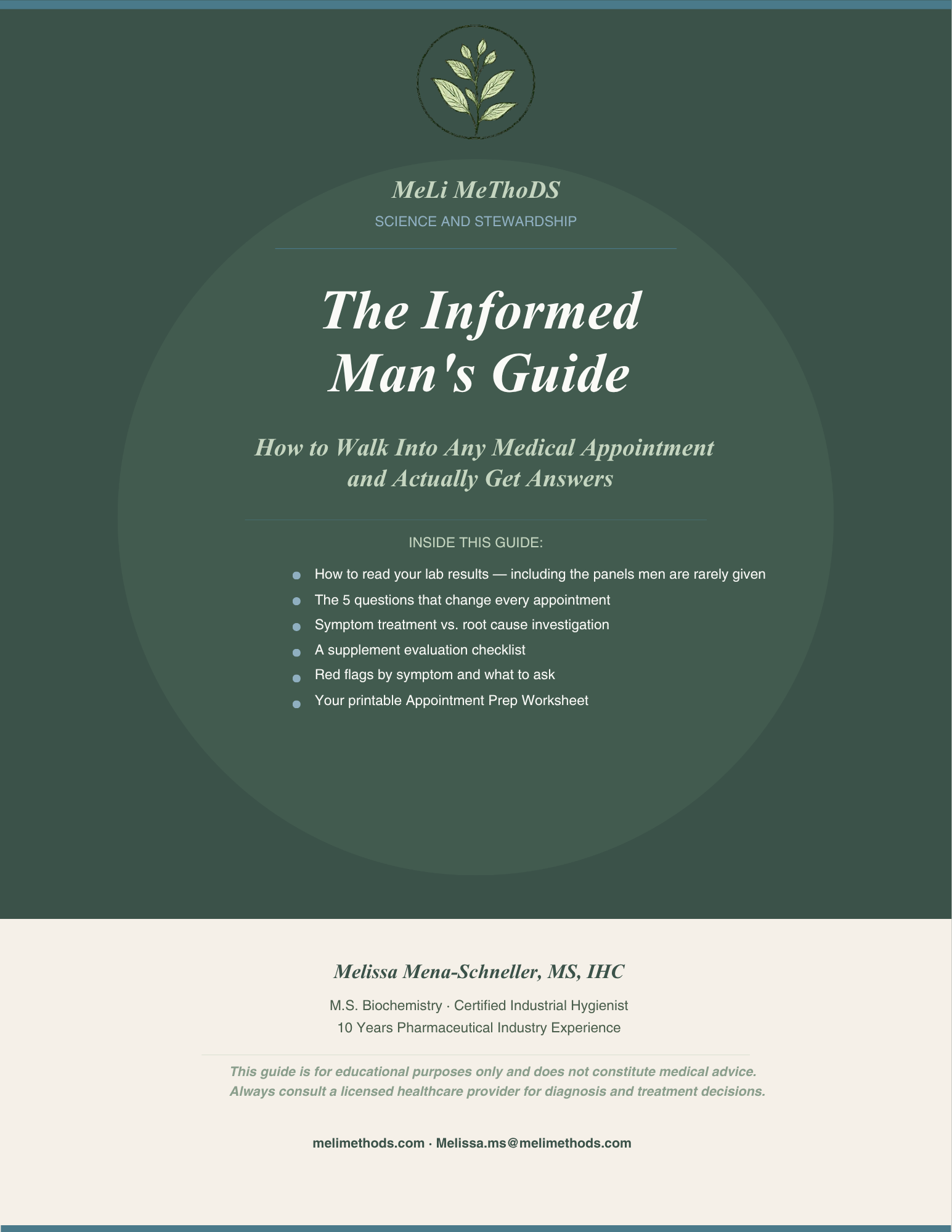
The Informed Man's Guide [Digital Download]
Most men are handed a lab result, told everything looks normal, and sent home. No explanation of what the numbers actually mean. No conversation about what optimal looks. No mention of the panels that were not run — what is actually happening at the hormonal, cardiovascular, and metabolic level.
The Informed Man's Guide was written for that experience.
This is not a fitness guide. It is not a testosterone optimization protocol. It is a science-backed reference written by a biochemist with 10 years of pharmaceutical experience — someone who looks at the human body the way a medicinal researcher looks at a potential medicine: down to the molecule, following every clue upstream until it reaches a source.
Men's health is one of the most under-investigated areas in healthcare — not because the science is not there, but because the culture around it has historically discouraged asking questions, pushing back on incomplete answers, or treating fatigue and low drive as anything more than the cost of getting older. That needs to change. Your symptoms are not random. They are clues. This guide helps you read them.
What is inside:
Seven Lab Panels Worth Understanding covers the CBC with platelet count versus platelet volume, the full hormonal panel — not just total testosterone because that alone is one of the most incomplete pictures in men's medicine, advanced cardiovascular markers, Lp(a), HOMA-IR, and homocysteine, Free T3 and why a normal TSH can coexist with significant cellular energy deficiency, the full B vitamin family by every name, and fasting insulin alongside fasting glucose, because insulin resistance develops years before glucose becomes abnormal and drives testosterone suppression, cardiovascular disease, and metabolic dysfunction.
The Five Questions That Change Every Appointment are written specifically for the men's health context, where incomplete panels are the norm and where treatment is frequently offered before the mechanism is understood. They cover the difference between managing a number and investigating a cause, what optimal looks like versus what is simply in range, how to ask for the pattern across the full panel, and — one of the most important and overlooked questions — what nutrients a treatment is known to deplete. Statins deplete CoQ10. Metformin depletes B12. Most men are never told.
Symptom Treatment vs. Root Cause Investigation explains the difference with examples drawn directly from men's health — testosterone replacement before the hormonal axis is fully evaluated, statins prescribed without knowing which pathway is driving the elevation, antidepressants initiated before cortisol, thyroid, testosterone, and nutritional status have been ruled out as contributors.
The Supplement Evaluation Checklist applies pharmaceutical evaluation standards to the specific needs of men: CoQ10 in its more bioavailable ubiquinol form, zinc and copper balance, form and dose matched to the actual peer-reviewed research, third-party testing, cofactor interactions, and whether the capsule technology in a specific product changes the absorption picture entirely.
Red Flags by Symptom maps seven of the most common presentations in men — persistent fatigue, low libido and drive, mood changes and poor concentration, declining recovery and strength, cardiovascular risk, sleep disruption, and abdominal weight gain — to the specific labs worth requesting and the specific questions worth asking for each one. Not to diagnose. To investigate upstream before accepting a downstream explanation.
The guide closes with 10 Appointment Prep Worksheets designed to be brought to every visit.
Your biology is specific. Your history is specific. The molecular picture driving your symptoms is specific to you.
This guide gives you the language to find out what it is.
Science and Stewardship. MeLi MeThoDS.
Most men are handed a lab result, told everything looks normal, and sent home. No explanation of what the numbers actually mean. No conversation about what optimal looks. No mention of the panels that were not run — what is actually happening at the hormonal, cardiovascular, and metabolic level.
The Informed Man's Guide was written for that experience.
This is not a fitness guide. It is not a testosterone optimization protocol. It is a science-backed reference written by a biochemist with 10 years of pharmaceutical experience — someone who looks at the human body the way a medicinal researcher looks at a potential medicine: down to the molecule, following every clue upstream until it reaches a source.
Men's health is one of the most under-investigated areas in healthcare — not because the science is not there, but because the culture around it has historically discouraged asking questions, pushing back on incomplete answers, or treating fatigue and low drive as anything more than the cost of getting older. That needs to change. Your symptoms are not random. They are clues. This guide helps you read them.
What is inside:
Seven Lab Panels Worth Understanding covers the CBC with platelet count versus platelet volume, the full hormonal panel — not just total testosterone because that alone is one of the most incomplete pictures in men's medicine, advanced cardiovascular markers, Lp(a), HOMA-IR, and homocysteine, Free T3 and why a normal TSH can coexist with significant cellular energy deficiency, the full B vitamin family by every name, and fasting insulin alongside fasting glucose, because insulin resistance develops years before glucose becomes abnormal and drives testosterone suppression, cardiovascular disease, and metabolic dysfunction.
The Five Questions That Change Every Appointment are written specifically for the men's health context, where incomplete panels are the norm and where treatment is frequently offered before the mechanism is understood. They cover the difference between managing a number and investigating a cause, what optimal looks like versus what is simply in range, how to ask for the pattern across the full panel, and — one of the most important and overlooked questions — what nutrients a treatment is known to deplete. Statins deplete CoQ10. Metformin depletes B12. Most men are never told.
Symptom Treatment vs. Root Cause Investigation explains the difference with examples drawn directly from men's health — testosterone replacement before the hormonal axis is fully evaluated, statins prescribed without knowing which pathway is driving the elevation, antidepressants initiated before cortisol, thyroid, testosterone, and nutritional status have been ruled out as contributors.
The Supplement Evaluation Checklist applies pharmaceutical evaluation standards to the specific needs of men: CoQ10 in its more bioavailable ubiquinol form, zinc and copper balance, form and dose matched to the actual peer-reviewed research, third-party testing, cofactor interactions, and whether the capsule technology in a specific product changes the absorption picture entirely.
Red Flags by Symptom maps seven of the most common presentations in men — persistent fatigue, low libido and drive, mood changes and poor concentration, declining recovery and strength, cardiovascular risk, sleep disruption, and abdominal weight gain — to the specific labs worth requesting and the specific questions worth asking for each one. Not to diagnose. To investigate upstream before accepting a downstream explanation.
The guide closes with 10 Appointment Prep Worksheets designed to be brought to every visit.
Your biology is specific. Your history is specific. The molecular picture driving your symptoms is specific to you.
This guide gives you the language to find out what it is.
Science and Stewardship. MeLi MeThoDS.